Thinking about artificial intelligence and climate change? You might wonder if it’s a game-changer for our planet or a big environmental problem. Big tech companies are spending a lot on AI, about $105 billion in data centers last year1. This raises big questions about AI’s sustainability and its impact on our planet.
AI could really help our planet, but we need to think about its environmental effects. The growth of AI might strain our planet, using lots of water and energy2. We must use AI in a way that’s good for our planet to fight climate change.
Tired of surface-level Ai generated content? Join our conscious community-Vision and be part of leaders that value transparency and are ready to challenge norms, beliefs and industries for a real change. We’re built for those who aren’t afraid to question the status quo for our people and the planet
AI: Friend or Foe?
As we explore AI’s impact on our planet, knowing the basics is key. Technological progress has made AI better, speeding up scientific discovery and innovation in many fields. AI can help manage resources and cut waste by analyzing data and predicting trends, which is vital for solving environmental issues and climate change3.
AI’s role in our lives is both exciting and worrying. It can work non-stop, making tasks easier and less tiring3. Yet, some worry about AI’s dangers, as noted by AI pioneer Geoffrey Hinton3. We must weigh AI’s good and bad sides as we move forward.
AI’s benefits include:
- Enhanced efficiency in tasks
- Improved accuracy in data analysis
- Increased chances for scientific discovery and innovation
As we dive into AI’s possibilities, our views on it are important. We can influence AI’s future, making sure it helps our planet4. By grasping AI’s basics and its effects, we can work towards a future where AI aids us all, driving technological progress and innovation.
How Your Carbon Footprint Gets a Digital Makeover
We all want to be kinder to our planet. Our digital lives can have a big impact. AI helps us use less energy and throw away less waste5. For example, training one AI model can pollute as much as five cars in their lifetime5.
Big companies like Microsoft and Google are using clean energy5. Microsoft wants to power its cloud with only green energy by 2025. Google says it’s already there5. The circular economy is growing fast, with a market value of $1.32 trillion by 20306.
By choosing wisely and supporting green companies, we can make a difference. We can all help make the planet healthier7.
| Company | Initiative | Goal |
|---|---|---|
| Microsoft | Renewable energy | 100% renewable energy by 2025 |
| Renewable energy | Already operating on 100% renewable energy |
Together, we can make choices that don’t harm the planet. We can support sustainability, environmental protection, and lower our carbon footprint567.
The Hidden Environmental Costs of AI Development
When we talk about AI’s impact on the environment, we must look at the environmental costs of making it. The creation of electronic waste, water use, and energy consumption are big issues in AI development8. For example, training AI models like GPT-3 uses a lot of electricity, leading to a lot of carbon emissions8.
Data centers play a big role in AI development and use a lot of energy. In 2023, they used about 2% of the world’s electricity9. The International Energy Agency says data center power use will grow by 80% from 2022 to 20269.
Here are some important facts about data centers and their environmental impact:
- Microsoft plans to spend $100 billion over five years on data centers9.
- Google will also spend $100 billion on data center growth for AI9.
- Each server makes about 1300 kg of CO2 during making9.
To lessen the environmental costs of AI, we need to use green practices and cut energy use. Knowing how data centers and AI affect the environment helps us make better choices about the tech we use and support8.
Smart Grids and Energy Management: Your AI-Powered Future
As we aim for a greener future, smart grids and energy management are key. They help cut down energy use and waste. AI makes smart grids better by optimizing energy flow, predicting needs, and stopping power outages10. This move also cuts down on harmful emissions and lowers your electricity bills11.
AI in energy systems lets us watch and control energy use in real-time. This means we can use resources better12. Advanced meters give us data to make energy use more efficient10. AI also stores extra green energy in batteries, keeping the power on when it’s needed most10.
Smart grids and energy management bring many benefits, including:
- Less energy waste and use
- Lower bills for you
- More green energy use
- Better and more reliable energy
To truly change for the better, we must embrace smart grids and energy systems. AI helps us use energy smartly and cut down on waste11. Together, we can build a future where energy is used well and waste is minimal11.
| Benefits | Description |
|---|---|
| Reduced energy consumption | Smart grids and energy management optimize energy distribution, reducing waste and consumption |
| Lower electricity bills | AI-powered energy management systems help to allocate resources efficiently, reducing costs for consumers |
| Increased use of renewable energy | Smart grids enable the integration of renewable energy sources, reducing dependence on fossil fuels |
When AI Meets Mother Nature: Environmental Monitoring Revolution
AI is changing how we watch over the environment. It helps us predict climate changes and protect wildlife better. This is thanks to AI’s ability to analyze data and make accurate forecasts13.
AI is a game-changer for saving our planet. It can sift through huge amounts of data to spot trends. This helps scientists and leaders make better choices for the environment13.
Some big wins from AI in environmental monitoring are:
- It makes climate predictions more accurate
- It boosts wildlife protection with machine learning
- It improves how we monitor ocean health
Studies show AI can cut carbon emissions by up to 88% by using green energy for data centers13. AI also makes weather forecasts and disaster planning better. This means quicker and more effective responses to natural disasters13.
Join our community to be with leaders who want to make a difference. We’re all about using AI for good. Together, we can make the future greener and more sustainable for everyone.
The Role of AI in Sustainable Agriculture
As we aim for a future that’s kind to our planet, sustainable agriculture is key. It helps reduce waste and use resources wisely. AI helps farmers make better choices, leading to a greener future for farming14. AI can also make farming more efficient by matching farming activities to soil types, boosting both efficiency and yield14.
About 33% of the world’s soil is damaged, but AI can help fix this. Companies like Planet Labs use AI to improve farming by analyzing satellite images and learning from them14. AI can cut down fertilizer use by 25%, saving resources and reducing harmful emissions15.
AI can also cut farming costs by over 22% worldwide16. It helps farms manage energy better, finding ways to save money and reduce waste16. By using AI, farmers can make smarter choices, leading to better profits and efficiency15.
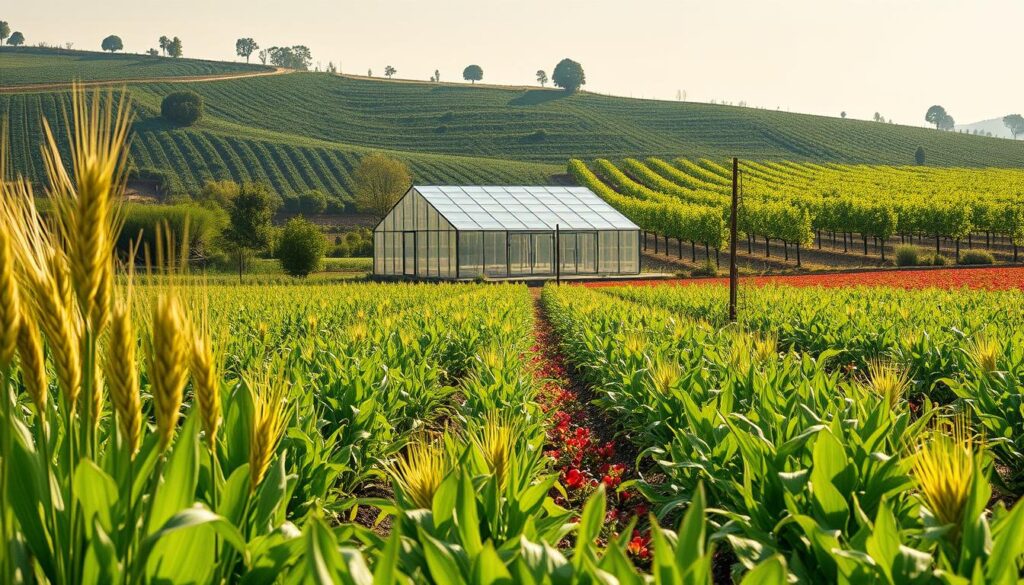
- Reduced crop loss by up to 20% through predicting adverse weather conditions and crop stress factors15
- Increased agricultural yields by up to 30% through optimized planting and resource management15
- Decreased water usage by approximately 30% through precision irrigation powered by AI15
We can build a future where our actions don’t harm the planet. AI is a big help in making this happen. It supports sustainable agriculture and environmental protection, driving innovation in farming141615.
Breaking Down How AI Can Combat Climate Change
Understanding AI’s role in fighting climate change is key. AI helps cut emissions and manage waste, leading to a greener future. For example, AI can cut cooling energy use in data centers by 40%17. Data centers are big carbon emitters, using a lot of energy all the time17.
AI also boosts renewable energy use by analyzing weather and energy demand17. This makes energy systems more efficient and better connected17. It uses predictive analytics and machine learning to do this. Plus, AI designs energy-saving buildings and plans green transportation routes, helping industries lower their carbon output17.
AI can fight climate change in several ways:
- Optimizing renewable energy sources
- Improving waste management solutions
- Enhancing energy efficiency in buildings and transportation
Using AI to tackle climate change is vital for a sustainable future. Climate change is a global crisis, affecting many fields18. AI helps us quickly process huge climate data sets, aiding in making smart decisions and policy changes18.
Your Part in the AI Environmental Revolution
As we face the challenges of the environmental revolution, your actions are key to a sustainable future. AI helps you make better choices about energy use and cuts down your carbon footprint19. By joining us, you become part of a group that values openness and is ready to challenge old ways for the better.
Choosing sustainability is now essential. AI is making a big difference in saving our environment. It uses advanced tech to spot important conservation areas20. Your actions help fuel a bigger push for environmental change and sustainability.
Here are some ways you can join the movement:
- Lower your energy use with AI smart home gadgets
- Back companies that care about the planet and its people
- Keep up with the latest in AI and saving our environment
Together, we can bring about real change and a greener future for everyone. Join us in this fight and be part of the AI environmental revolution19. Together, we can make a difference and secure a brighter tomorrow for our planet.
The Dark Side: When AI Solutions Create New Problems
Exploring AI, we must think about its downsides. The creation of electronic waste, water use, and energy consumption are big worries in AI. These issues show we need to focus on sustainability21. For example, AI training uses a lot of energy, which harms the environment and uses up natural resources21.
The rebound effect is another problem. AI makes things more efficient, but this can lead to more use. This can hurt the environment a lot. It shows we need to be careful with how we use AI.
There are many concerns with AI, like data privacy and security threats. There’s also the worry of AI being used badly, and it not being fair or accurate. It can also replace jobs and cause strategic problems22. To fix these issues, we must make AI development more sustainable and open. This way, AI’s good points can be shared fairly, and its bad points can be lessened.
To solve these problems, companies need to think about AI’s effects on the planet and people. By doing this, they can make AI that helps businesses and the planet too21.
Balancing Progress with Planetary Health
As we aim for progress, we must think about how it affects planetary health. The connection between harming the environment and our well-being is clear. The Planetary Health framework shows this23. We need to focus on sustainability and quality of life as signs of success. This means using community-driven solutions that protect our natural world23.
Even small actions can make a big difference for our planet’s health23. Using artificial intelligence (AI) in farming can help grow more food while using less harmful chemicals24. Countries like Spain, Brazil, and Italy are using the Internet of Things (IoT) to manage water better in farming24.
To find a balance, we need a complete approach. This includes:
- Teaching people about the environment to respect its limits23
- Supporting local efforts to protect nature23
- Creating AI tools to forecast dangers and changes24
We can build a future where our choices don’t harm the planet. By choosing sustainability and community-driven solutions, we can keep our planet healthy for future generations23.
Why Traditional Climate Solutions Aren’t Enough
Traditional climate solutions can’t solve the big problem of climate change25. We need new ideas and ways to be sustainable more than ever. AI can help us find new solutions and make things more efficient, which is good for our planet25.
Training one AI model can use as much carbon as a car does in its whole life25. Making chips for AI also uses a lot of energy, adding to our carbon footprint25. Big tech companies like Amazon and Google want to be carbon neutral, but we need to do more25.
Upgrading old power lines with new materials could double their power26. It’s cheaper than building new lines26. By being innovative and sustainable, we can make a better future. We must make sure AI is good for the planet before we use it a lot.
Here are some ways to achieve this:
- Use grid technologies to send more electricity26
- Make studies faster, not taking years26
- Invest in clean energy and cut down on emissions26
By working together, we can overcome the limits of old solutions. We can make a greener future for our planet25.
Conclusion: Your Role in Shaping an AI-Powered Sustainable Future
The power of AI is huge in making our future greener27. It’s changing how we use energy and grow food for the better28. But, the real change starts with you – you can make a big difference.
By choosing wisely every day, you can help lead the AI-powered green movement27. Join us in our quest for a better world28. Together, we can use AI to cut down on pollution and save resources.
Imagine a world where tech and nature work together27. Your efforts and dedication to green living can guide our future28. Let’s start this journey together and see the amazing changes we can make.